A made-to-measure drysuit is cut to the wearer’s own measurements, not a size chart. Here’s how Hammond’s process works, and who actually needs one.
Made-to-Measure Drysuits: How They Work and Who They Are For

Most Hammond Drysuits customers go down the made-to-measure route, and a handful of models are only offered that way. A made-to-measure drysuit is cut from one person’s own measurements, so it follows their actual shoulders, torso and leg length. That makes it a genuinely custom drysuit, where a standard size chart can only offer the nearest match. Where a standard suit usually starts to give, a made-to-measure one tends to hold.
Every suit in Hammond’s drysuit range is built to order, standard sizes included, so nothing comes off a shelf. What changes between the two routes is how closely the pattern follows the person wearing it.
How does Hammond measure for a made-to-measure drysuit?
Hammond’s method works from thirteen measurement points across the whole body. They’re taken over light clothing, apart from the neck, wrist and ankle, which are measured directly against the skin. For wrist to wrist, the tape runs across the shoulder blades with both arms held out in front, roughly the position you’d hold when riding a bike.
At a measuring appointment, someone else does all of this for you. Anyone measuring at home to enter their figures at checkout should still get a helper, because several points are awkward to take alone. Wrist to wrist is the obvious one.
The thirteen points are:
- Full height and shoulder height to floor
- Neck, wrist and wrist to wrist
- Chest, waist and hips
- Widest thigh, knee and calf
- Inside leg and shoe size
Orders then go through in one of two ways. Customers either book a measuring appointment, virtual or in person, or enter their own measurements directly at checkout.
When does a standard-size drysuit work, and when is made-to-measure needed?
Standard sizes run from Junior S to XL and Adult XS to XXL. If a build sits close to one of those combinations and the suit only sees occasional use, the chart will usually do the job. Made-to-measure earns its place where the chart can’t describe the wearer, say broader shoulders above a narrower waist. Heavy use is the other case, because a small mismatch gets felt on every single outing.
What if someone has an unusual body shape or proportions?
This is often the clearest case of all, more so than any particular activity. Take someone with a longer-than-average torso and shorter legs, or a chest measurement well above the waist beneath it. No single standard size will match both dimensions at once. A made-to-measure pattern is built around that person, which closes the gap.
Why do divers, sailors and paddlers need different drysuit features?
Sailors get back panels for extra reach when pulling in the mainsheet. For divers, the choice is a front or rear zip, placed for how they get in and out of the suit.
Fit matters differently once you’re in the water. Underwater, a diver’s suit is under continuous pressure for the whole dive, so a poor fit affects buoyancy, trim and comfort from start to finish. Sailors and paddlers spend most of their time at the surface and are in and out of their suits across a day. For them, reach and mobility count for more.
Why do search and rescue, lifeboat, commercial and fisheries teams choose made-to-measure?
Rescue crews often have to move in awkward spaces, where a standard cut can bind or ride up. Panels under the arms, knees and elbows give them room to work. Crews also wear the same suits over and over, often for years, so getting the fit right at the start removes a recurring cause of downtime across the whole roster.
For a buyer kitting out a crew, logistics matter too. Hammond travels to measure a team on site, which saves every member having to attend on their own.
What can be personalised on a made-to-measure drysuit?
Colour, seal type (latex or neoprene), gloves, footwear and zip position can all be chosen. Teams can go further, with matching crew colours, logos and specific boot sizing for each member.
Hammond’s 2005 shortie drysuit shows just how bespoke a drysuit can get. It started when a doctor asked for a drysuit adapted for her daughter, who had a Hickman line (a long-term tube into a vein for ongoing treatment) that needed to stay dry. The same design now helps children and adults get back to watersports without interrupting their treatment.
What happens if a customer’s measurements change after their made-to-measure drysuit is made?
Sizes change, and a made-to-measure suit can be altered to keep up. Hammond handles this the same way it repairs and services any make or model that comes into the workshop, by adding panels or moving zips to new positions. Only the area that no longer fits gets adjusted, so there’s no need to start again from a blank pattern.
Why does a better fit make a drysuit last longer?
Every time an arm bends, a seal that sits too high or too tight works against the skin. A panel cut a touch short, or too wide, does something similar, carrying stress at one point until that’s where the suit eventually splits. When seals and panels sit correctly, they don’t take the same fold or stretch in the same spot on every wear. That’s one of the main reasons a well-fitted drysuit lasts longer, alongside fabric quality and care.
Getting the pattern right from the first cut is what builds that in. A suit that fits on day one is far less likely to be retired early at its first point of strain.
What shows a made-to-measure drysuit is genuinely handmade in the UK?
A UK brand name doesn’t necessarily mean a drysuit was cut, stitched and fitted here. The more reliable test is whether those stages happen on the company’s own site, and whether the maker can tell you who made your suit.
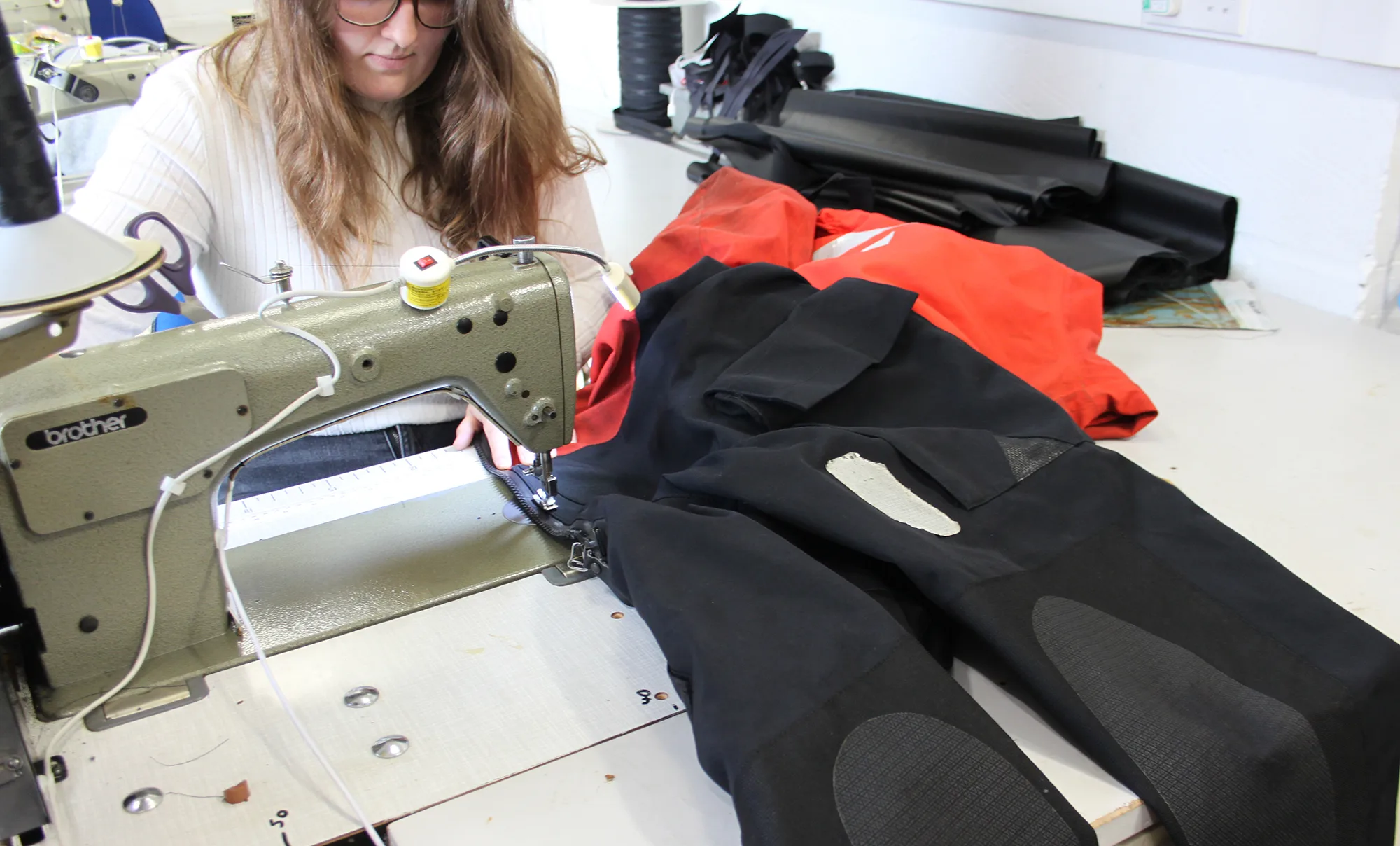
Hammond has made drysuits in Dartford, Kent, for over 45 years, and keeps that work in-house. Every suit is handmade from scratch in the UK by Hammond’s own cutters, stitchers and repairers, and customers can find out exactly who made theirs. Anything built in tri-laminate material also comes with a 5-year guarantee as standard.
Questions about your own measurements, or your team’s? Call Hammond on 01474 704 123 or book a measuring appointment online.
Newsletter
Receive the Latest News and Updates
"*" indicates required fields